
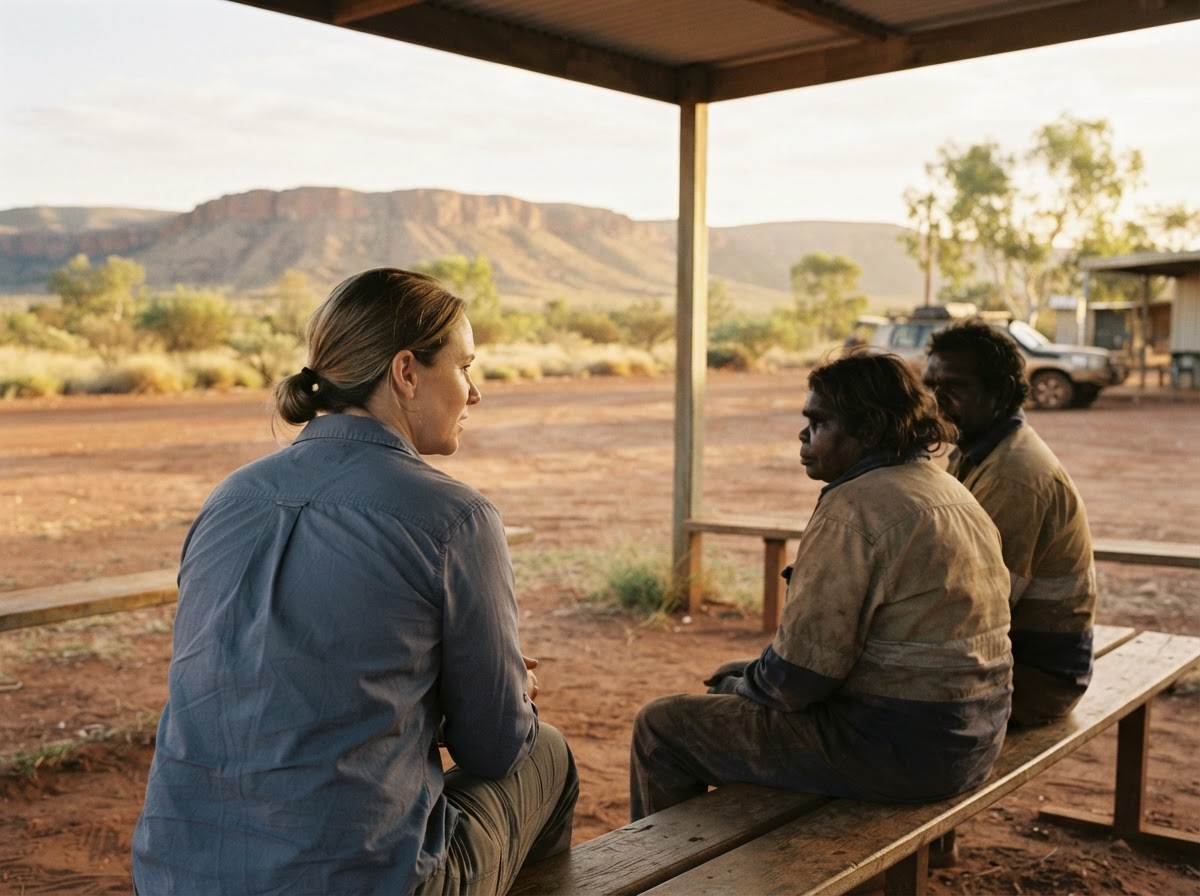
Step-by-step guidance when someone is missing.
If a loved one is missing in remote Western Australia, you do not have to navigate this alone. Here is what to do, in order — and the support the foundation can provide at every step.
Six steps, taken at your pace.
Every situation is different, but these steps form the backbone of a coordinated response. Your coordinator will walk through each one with you.
- 01
Report to police
Contact WA Police on 000 for emergencies, or your local police station to file a missing persons report. You do not need to wait 24 hours. Ask for a case number and the investigating officer's contact details.
- 02
Call the foundation
Call our support line on 1800 995 732. Or reach us via the help request form below and a coordinator will contact you — at your pace, in your language.
- 03
Meet your coordinator
You are paired with a dedicated family coordinator who stays with you throughout. They are your single point of contact — for logistics, liaison with police, media, and welfare support.
- 04
Plan the search response
We work alongside official services to assess terrain, plan volunteer search areas, set up communications, and arrange transport, water, and accommodation so you can be on-country if you choose.
- 05
Share the story
If you wish, we help draft and distribute a missing person appeal — working with media, community networks, and social channels to keep your loved one's name visible.
- 06
Ongoing support
Searches can be long. We provide counselling, peer connection with other families, and practical help for as long as it takes — including after a loved one is found.
Practical help, organised for you.
Legal Navigation
Understanding your rights, reporting obligations, and working with WA Police and coronial processes.
Logistical Support
4WD transport, fuel, water, and accommodation so families can be present during a search at no cost.
Media Liaison
Drafting appeals, managing press contact, and keeping the focus on finding your loved one with dignity.
Cultural & Community Liaison
Advocates who respect cultural protocols and the rhythms of every remote community.
Search Coordination
Organising volunteer searchers, waypoints, and communications across vast distances.
Counselling & Wellbeing
Trauma-informed counsellors and peer support from families who have lived this experience.
Information that helps a search.
You may not have all of this — that is okay. Gather what you can. The more detail police and search coordinators have, the more targeted the response can be.
Call our support line on 1800 995 732. A coordinator will help you gather and organise this information.
1800 995 732
- Full name, date of birth, and any known aliases
- A recent, clear photograph
- Description: height, build, hair, eyes, distinguishing marks
- What they were last seen wearing
- Last known location, time, and who they were with
- Vehicle registration, make, model and colour
- Medical conditions, medications, or mental health context
- Places they are known to go, and people they may contact
- Any recent changes in behaviour or circumstances
- Your contact details and those of other close family
Browse & download family resources.
A library of downloadable PDFs — checklists, guidance documents, and practical tools for families navigating a missing person case in remote Western Australia.
Missing Person Quick Reference Card
A one-page quick reference for the first 24 hours of a missing person report — what to gather, who to call, and what to expect.
Region: Statewide
Remote Travel Safety Checklist
A comprehensive checklist for preparing vehicles and supplies before travelling on remote WA tracks during a search.
Region: Statewide
Family Rights & Legal Pathways
An overview of legal rights, reporting obligations, and pathways for families dealing with a missing person case in WA.
Region: Statewide
Downloadable resources for recent & long-term disappearances.
Save these guides to your phone or print them before you travel. They cover everything from the first hours of a search to navigating the years that follow — and they work offline, because signal is never guaranteed in remote WA.
Call police on 000 immediately if someone is in danger — you do not need to wait 24 hours.
Avoid searching in peak heat (11am–3pm). Heat is a serious threat in remote WA.
If you become lost, stay with your vehicle — it is easier to find than a person on foot.
Carry at least 4 litres of water per person per day, every day.
Text messages often deliver when calls cannot, and use less battery.
Never cross flooded causeways. Turn around and find another route.
Missing Person Information Checklist
Everything to gather about your loved one before and during a search — so police and coordinators can act fast.
Generates a printable PDF — works offline once saved.
Remote Area Survival & Water Guide
Essential guidance on water, heat, and self-care if you are on-country during a search in remote WA.
Generates a printable PDF — works offline once saved.
Communications & Signal Guide
How to stay connected when mobile coverage is unreliable across WA's remote regions.
Generates a printable PDF — works offline once saved.
Vehicle & Travel Preparation Guide
What to check and carry before driving remote tracks during a search operation.
Generates a printable PDF — works offline once saved.
Long-Term Missing: Navigating the Journey
Guidance for families whose loved one has been missing for months or years — keeping the case active, maintaining hope, and knowing your rights.
Generates a printable PDF — works offline once saved.
Media & Public Awareness Guide
How to work with media, use social platforms, and keep public attention on your loved one's case over time.
Generates a printable PDF — works offline once saved.
Legal & Practical Affairs Guide
Managing the financial, legal, and administrative challenges when a family member is missing — short or long term.
Generates a printable PDF — works offline once saved.
Family Wellbeing & Self-Care Guide
Emotional and mental health support for families enduring the uncertainty of a missing loved one — recent or long-term.
Generates a printable PDF — works offline once saved.
Download all eight guides.
Get every resource below, or contact us and we will post a printed pack to you.
Submit initial details to the foundation.
Share what you can — a coordinator will contact you to follow up. You do not need to have every answer. If someone is in immediate danger, call 000 first.